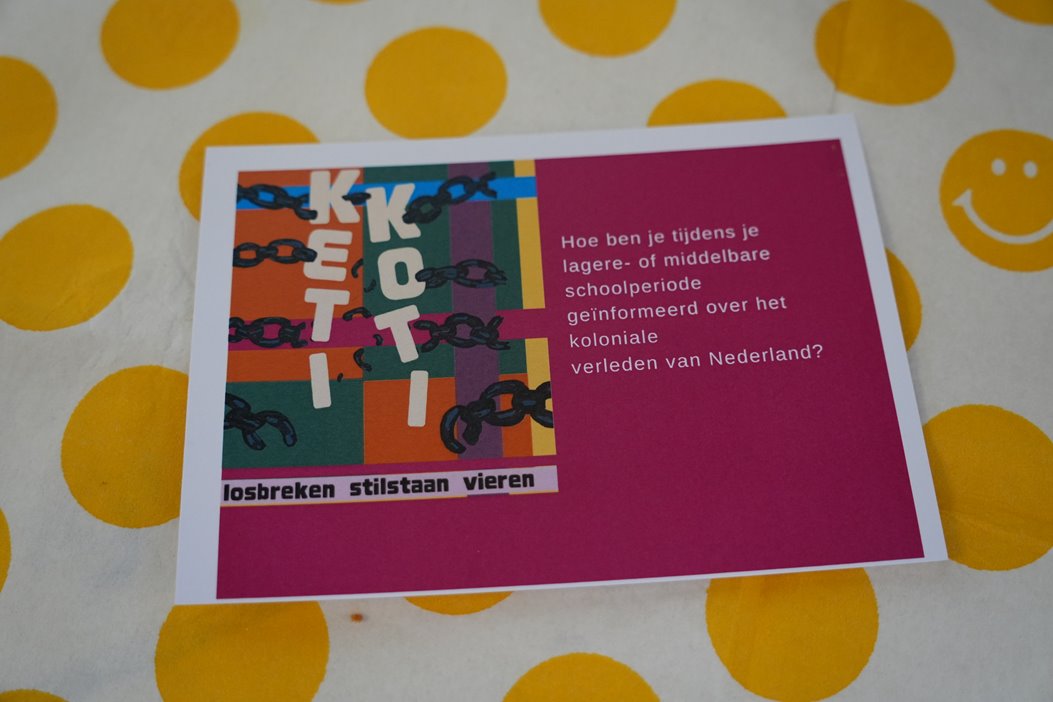
Keti Koti 2026: stories that must be told again and again
- 01 July 2026
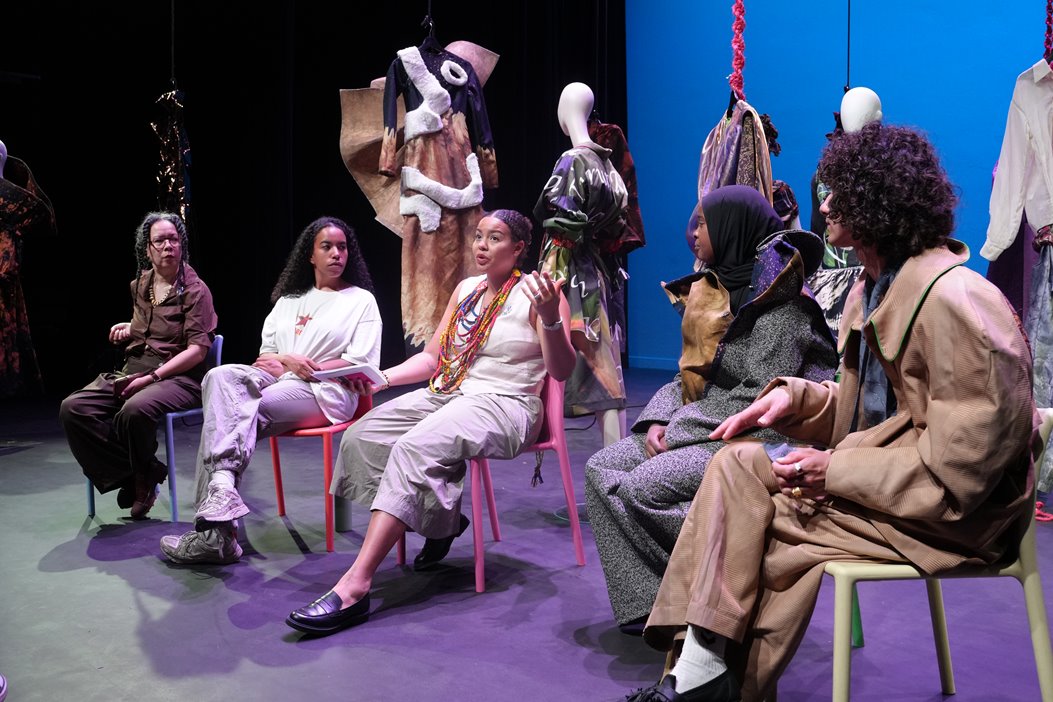
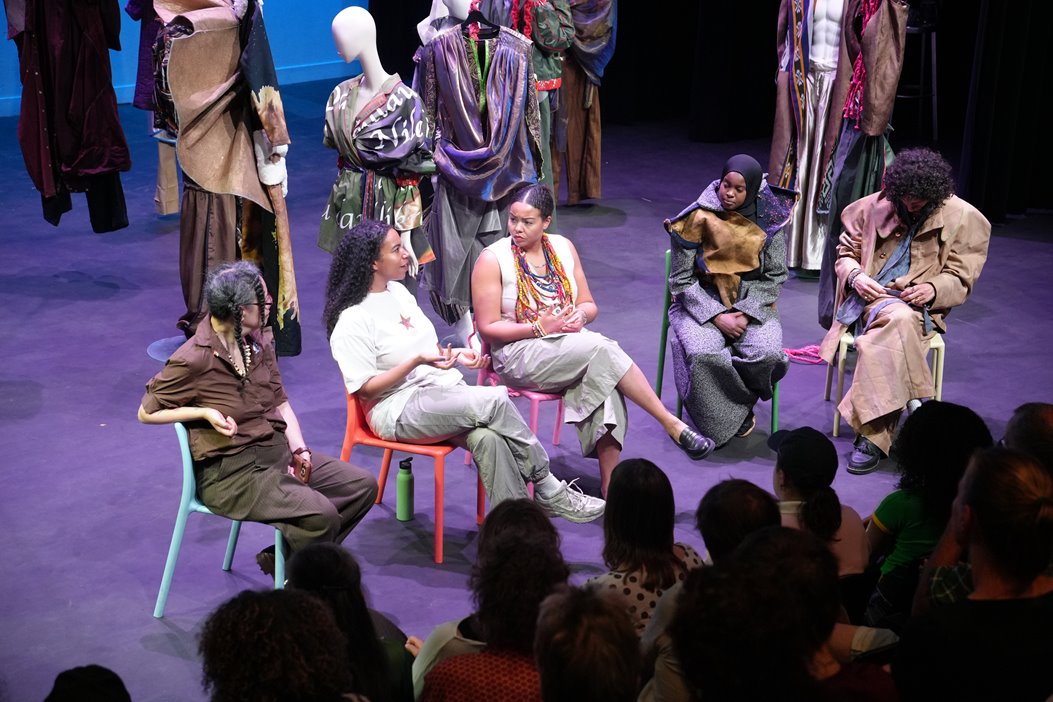
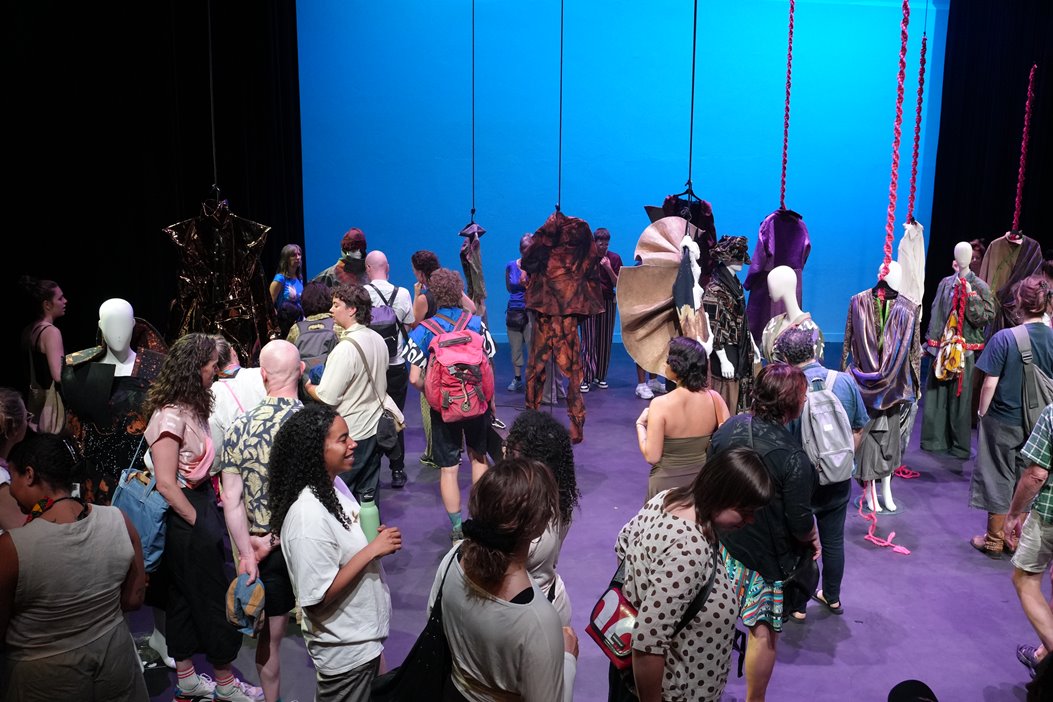
1 July was the celebration of Keti Koti, Surinamese for 'chains broken'. Across the Netherlands, this day is dedicated to commemorating and celebrating the abolition of slavery. At HKU, this has also become an annual tradition. Students and staff gathered in the main auditorium of the Theatre at Janskerkhof. Past and present, and the profound impact these stories still have today, came together through the powerful work by fourth-year Theatre and Fashion Design students.
Keti Koti 2026: stories that must be told again and again
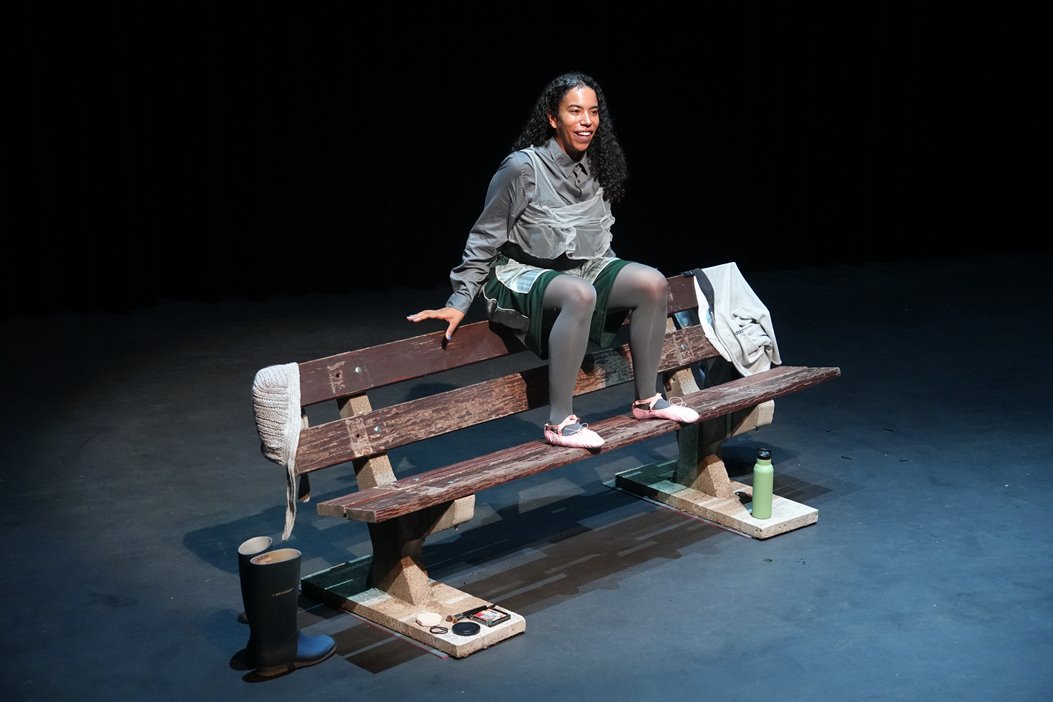
In her performance Ode aan de stadsduif (Ode to the City Pigeon), fourth-year Acting student Maartje Strijk guides the audience through her experience of growing up between 'white' and 'black', with both Dutch and Surinamese roots. With her voice and physical performance, she expresses that she feels like a cross between a grey city pigeon and a white dove of peace. And how this duality both tears her apart yet also connects her to who she is.
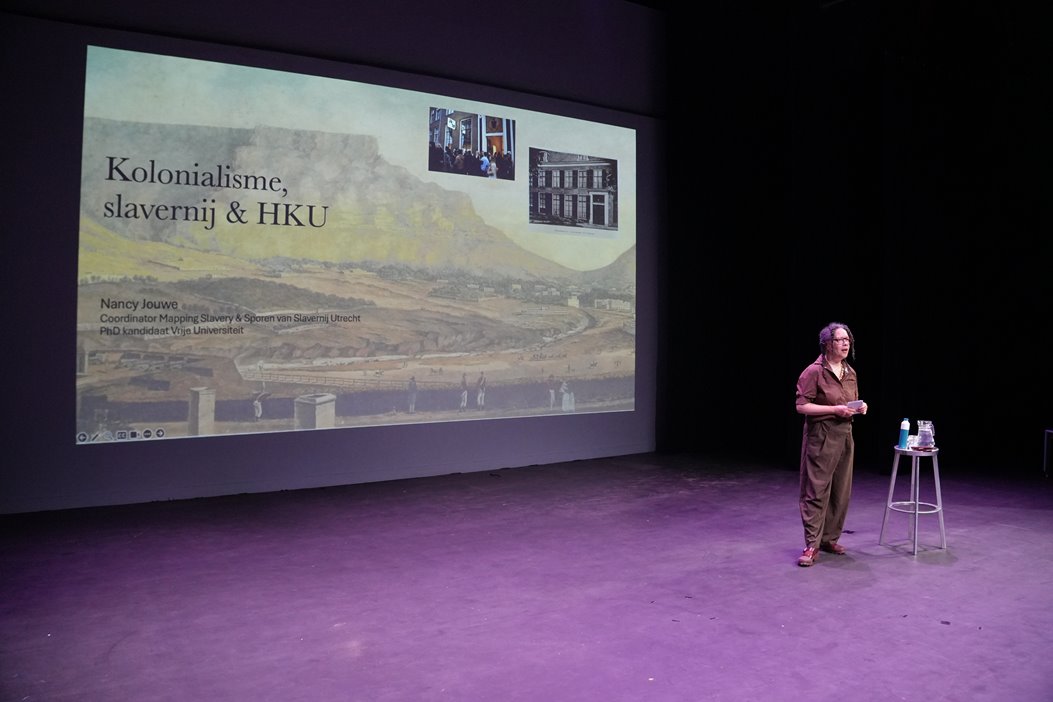
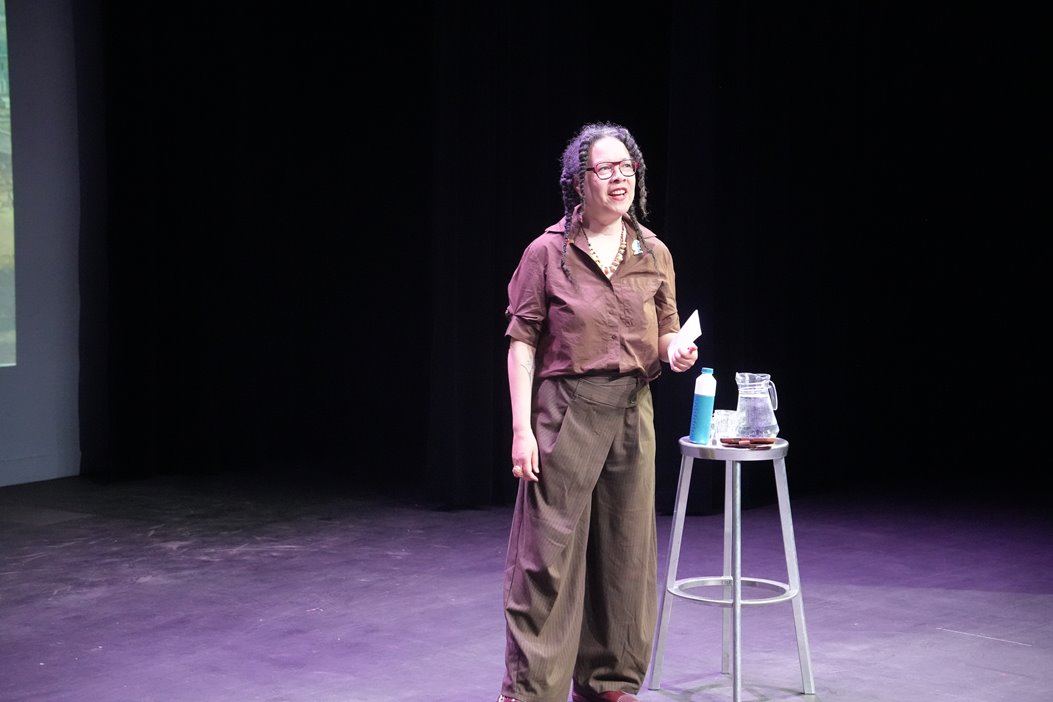
The bridge to this distant past is expertly built by cultural historian Nancy Jouwe, fomer HKU lecturer and fellow. She is the author of Slavernij in Utrecht (Slavery in Utrecht) and well known for her city walks Sporen van Slavernij (Traces of Slavery).“Slavery is inseparable from colonialism,” she begins. “The stories about it are far more extensive and numerous than we can imagine.” She demonstrates this point by drawing on extensive research in archives and visual sources. These stories are closer to home than you might think. Between 1883 and 1906, the building that now houses HKU Theatre at Janskerkhof 18 was home to the Utrecht Missionary Society. Missionaries were trained there before they went to the colonies to convert local people to Christianity. Nancy describes this as “the colonisation of the soul”. It was part of a broader process of erasing cultures, she explains. Her own family history illustrates this: the original surname of her ancestors, Jawe, sounded too much like to the name of God in the Old Testament, Yahweh. Missionaries therefore insisted that it be changed to Jouwe.
Furthermore, objects from indigenous cultures in the colonies were removed and displayed in the very building that is now home to HKU Theatre. Many buildings used for higher education today are connected to the history of slavery. “Telling these stories is part of a growing process of awareness.”
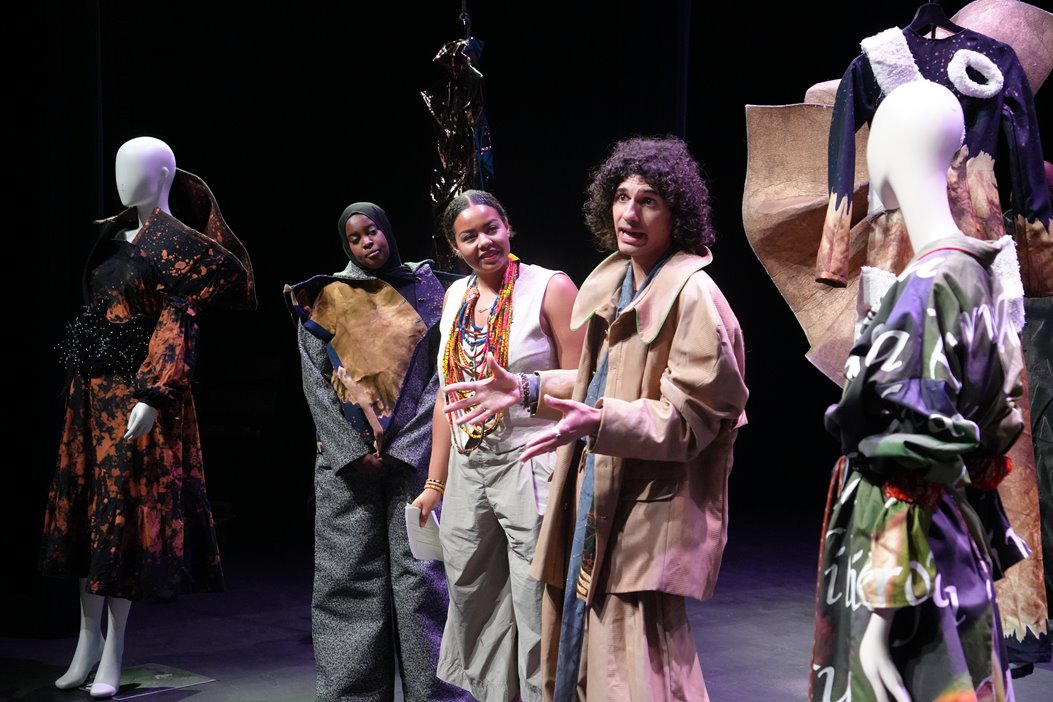
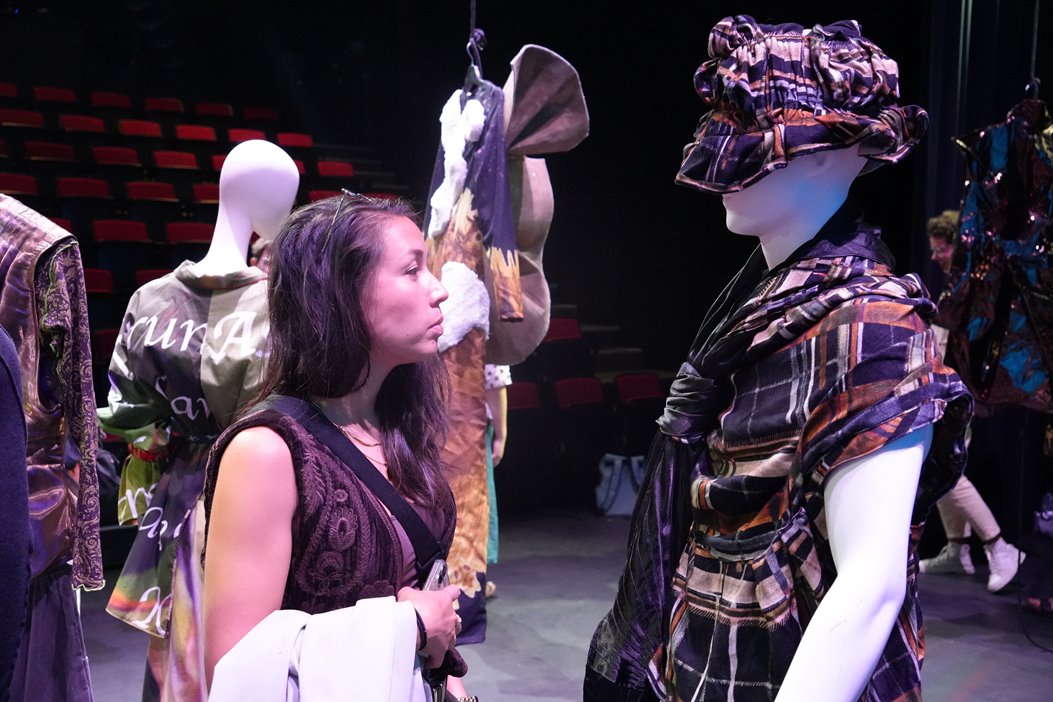
The lasting impact of colonialism and the stories that are still told from one generation to the next, can also be expressed through fashion design, as was demonstrated by graduating students Sabrin Abdillahi and Nilan Kuiper. Through their designs, they explore how decolonisation has shaped their identities, perspectives and creative practices. Sabrin's collection, Becoming, is the result of a deeply transformative journey, moving through trauma and reflection towards a future that redefines what is possible. With Pulau Tengah (meaning: Middle Island) Nilan explores the space between his Moluccan and Dutch heritage: the place between two worlds. By combining Eastern and Western influences and expressing them through layers within his designs, he gives shape to the cultural divide in which he was raised. Nancy Jouwe's story about changing family names also resonates with him. His family's Moluccan surname, Liptiay, was altered when they arrived in the Netherlands, for it was deemed too difficult to pronounce.
The morning concluded with a conversation between five people who shared the stage during this year’s Keti Koti at HKU. The audience also participated in a reflection on the question: What would your world look like if you would break free? As an arts university, HKU has a responsibility to tell these stories, Carmen Lamptey emphasises. “Let's not limit this conversation to 1 July alone. Think about what you can do within your own sphere of influence.”At the end of the event, everyone received a cowrie shell, which were once used as currency in the trade of enslaved people. “Take this shell to the place where you feel a responsibility to keep these stories alive, and leave it at a place that is meaningful. That is today's assignment.”