A striking example of an immersive experience is Lacuna by immersive artist Nienke Huitenga Broeren. This virtual reality documentary, which premiered at the Cannes Film Festival in May 2025, takes you on a virtual reality exploration through the memories of an 86-year-old woman who recalls how she lost her parents as a small child during the Second World War
Another strong example is the VR opera Songs for a Passerby by immersive artist Celine Daemen, n which you walk through a musical dreamscape in VR, reflecting on how we relate to the world around us.
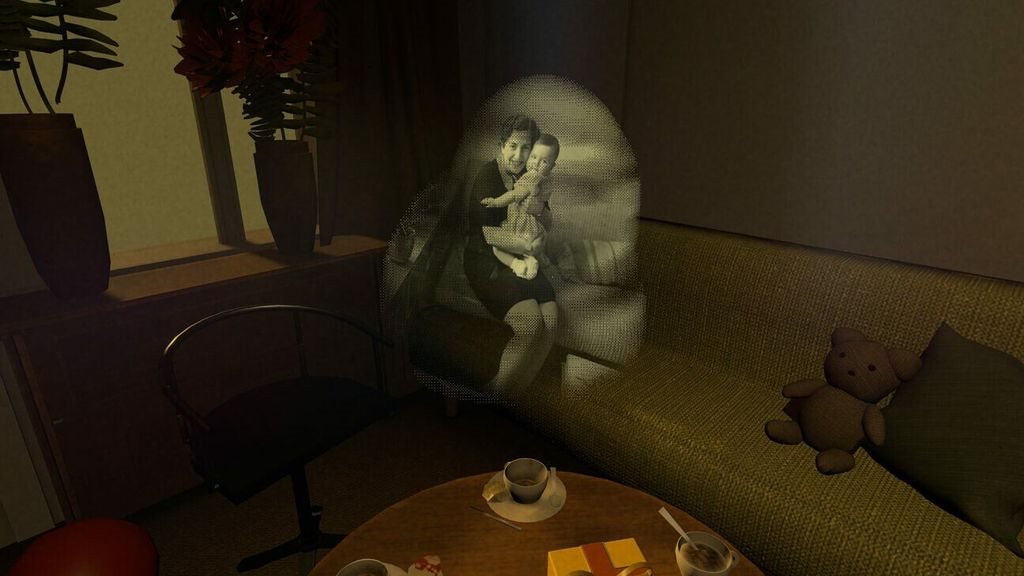
Still from the virtual reality documentary Lacuna. Creators: Maartje Wegdam, Nienke Huitenga Broeren and Podium Biarritz.
Collaborative approach
Developing this kind of experiences calls for a collaborative approach to designing, preserving, and reusing these complex productions. Through this project, known as HEFT (Heritage for the Future), the consortium aims to contribute to a sustainable ecosystem for immersive experiences.
Central role for creators
The lead partner for HEFT is the Netherlands Institute for Sound and Vision, the country’s media archive. Alongside HKU, represented by the Professorship (Dis)Connected Technology & Creativity, other partners are EYE Filmmuseum, Netherlands Film Festival, Amsterdam University and Satore Studio.
Also involved are a number of experienced makers of immersive experiences. These makers — and their creative processes — play a central and essential role in the project. They use their creative practice as research by (re)designing, prototyping and testing both existing and new immersive works with wider audiences. The participating makers include Studio Nergens (Celine Daemen), Studio ZZZAP (Nienke Huitenga Broeren), Richard Vijgen and Nullshima Studio (Anne Fehres & Luke Conroy).
Solid Foundation
Over the course of two years, the consortium will investigate methods for artistically and sustainably developing immersive experiences and preserving them as cultural heritage so that they can be re-experienced in the future. In this way, the partners are building a solid foundation for these unique media forms, ensuring that the power of these experiences endures beyond the project itself.
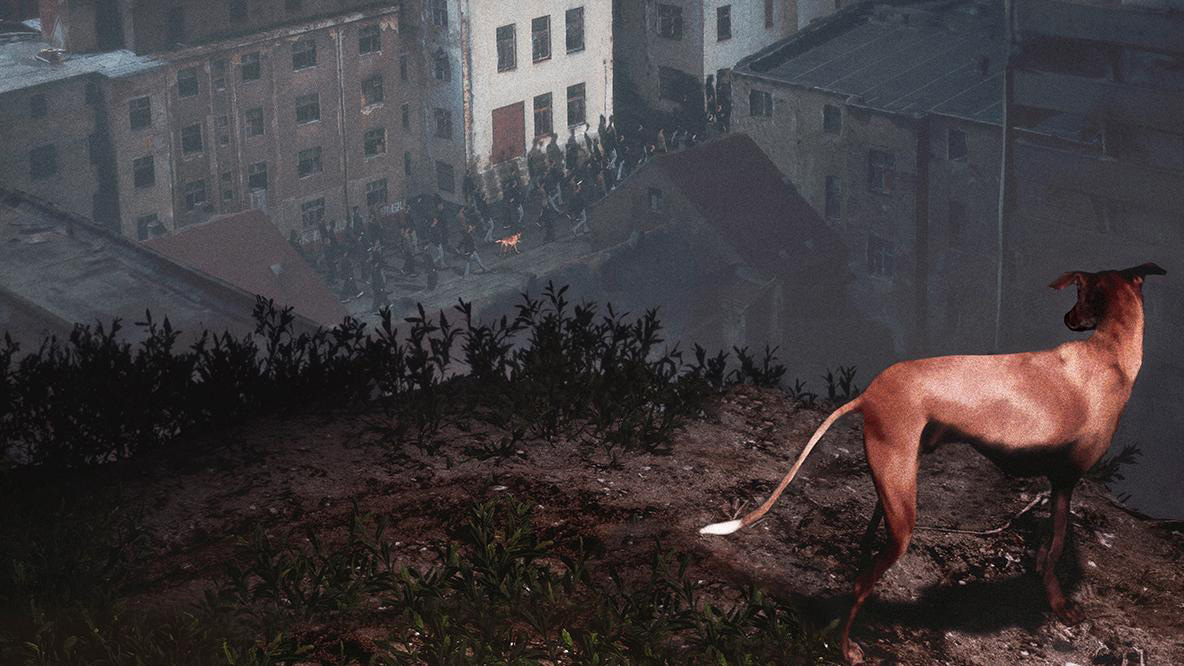
Still from the VR opera Songs for a Passerby. Maker: Celine Daemen.
Role of HKU
Within the HEFT project, HKU is responsible for the research activities related to embodied and meaningful immersive experiences. Nick Degens, lector, and Joris Weijdom, associate lector of the (Dis)Connected Technology & Creativity research group, are proud that HKU has been entrusted with this role: “At the professorship and in the HKU AXR lab, we already collaborate closely with many makers and artists in artistic technological creative processes. With HEFT, we can take this a step further: by organising IX-Design Labs on topics such as dramaturgy, interaction and storytelling, we will gain knowledge that is not only relevant to practice but also to our creating studens at Games, Media and Theatre.”
Stimulus grant
The project is supported by a €1.3 million grant from the Artistic & Design Research for Immersive Experiences (ADRIE) programme of the Netherlands Creative Industries Fund. HEFT is part of the larger Creative Industries Immersive Impact Coalition (CIIIC) ggrowth fund programme, which aims to enable the creative industry and content makers to seize opportunities in immersive experiences.